Call Now: +91-9810127011,+91-9999741959
Mail Us: nagpalengg@gmail.com

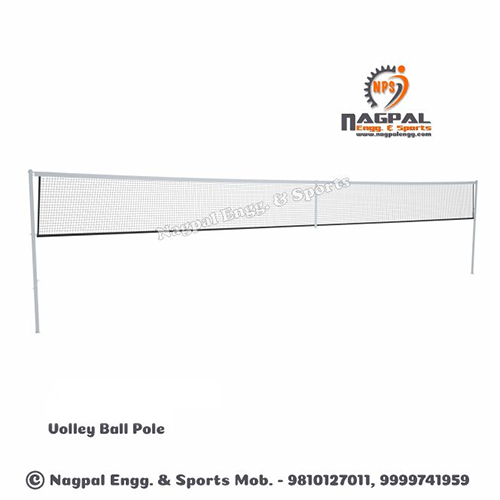
Volleyball poles, also known as volleyball standards or uprights, are essential components of a volleyball court because they support the net and help maintain the required playing height and tension. A properly designed pole system contributes to a stable and well-organized playing environment for professional matches, school competitions, sports academies, recreational games, and multi-purpose sports facilities. Volleyball Poles Manufacturers in Delhi offer a range of durable and reliable volleyball net-post systems designed for indoor and outdoor courts, educational institutions, sports clubs, and recreational facilities.
Depending on the installation environment, volleyball poles can be supplied as in-ground, sleeve-mounted, portable, weighted-base, grass, or beach volleyball systems. Material selection also plays an important role, with steel, aluminum, and carbon fiber offering different combinations of strength, weight, durability, and portability. At Nagpal Engineering & Sports, we provide volleyball pole solutions designed around the court layout, surface conditions, frequency of use, portability requirements, and intended application. Our systems can be suitable for indoor gymnasiums, schools, colleges, sports clubs, public recreation areas, outdoor courts, and beach or grass volleyball setups.
Volleyball poles are vertical uprights installed on either side of the volleyball court to support the net at the required height and maintain appropriate net tension. They form the primary structural support for the volleyball net and are positioned outside the playing area according to the court arrangement.
The poles can be permanently installed into ground sleeves or supplied as portable systems with heavy weighted bases. For outdoor grass or beach applications, lightweight poles can be supported using guywires, ropes, and ground stakes.
A volleyball pole system may also include essential components such as a net winch, tensioning mechanism, safety padding, antennae, and boundary markers. The right configuration depends on whether the court is permanent, temporary, indoor, outdoor, or designed for multiple sports.
Height adjustment is an important feature of a volleyball pole system because different categories of play use different net heights. The supplied specifications include the following standard heights measured from the center of the court:
Adjustable volleyball poles allow facilities to change the net height according to the category of play without replacing the complete pole system.
In-ground volleyball poles are suitable for dedicated indoor courts and sports halls where the equipment is frequently used.
Educational institutions can use adjustable volleyball pole systems for physical education classes, competitions, training sessions, and recreational activities.
Volleyball training centers and sports academies require durable pole systems capable of supporting repeated practice and competitive play.
Portable weighted-base systems are useful in halls where the same playing surface is used for volleyball, basketball, badminton, or other sports.
Lightweight volleyball systems supported by ropes and ground stakes can be used for casual games and recreational volleyball on suitable grass surfaces.
Outdoor beach volleyball setups can use lightweight poles designed to work with appropriate anchoring systems for sand-based playing environments.
Public parks, residential communities, resorts, and recreation centers can install suitable volleyball pole systems for community sports and leisure activities.
As reliable Volleyball Poles Suppliers in India, Nagpal Engineering & Sports provides pole systems designed for different sports facilities and installation conditions. We understand that a dedicated indoor volleyball court has different requirements from a school playground, multi-purpose sports hall, outdoor grass court, or beach recreation area. Therefore, pole selection should consider the playing environment, surface type, required stability, portability, and frequency of use.
Our volleyball pole solutions can include in-ground sleeve-mounted poles, portable weighted-base poles, outdoor grass systems, and beach volleyball configurations. Fixed systems are suitable for permanent courts where the poles need to remain securely positioned. Portable models offer greater flexibility for facilities where court layouts are regularly changed.
Material selection can also be adapted to the intended application. Steel volleyball poles offer high rigidity and durability, while aluminum provides a lighter and rust-resistant alternative. Carbon fiber can be considered for premium applications where low weight and high rigidity are important.
We can also provide systems with supporting accessories such as net winches, tensioning mechanisms, safety padding, antennae, and boundary components. Our focus is to provide practical volleyball court equipment that combines structural performance, usability, durability, and appropriate installation characteristics.
|
Specification |
Details |
|
Product |
Volleyball Pole / Volleyball Standard / Upright |
|
Main Types |
In-Ground, Sleeve-Mounted, Portable, Weighted Base, Grass & Beach |
|
Men's Net Height |
2.43 metres |
|
Women's Net Height |
2.24 metres |
|
Youth/Co-ed Height |
Approximately 2.13–2.35 metres |
|
Common Materials |
Carbon Fiber, Aluminum, Steel |
|
Fixed Installation |
Ground sleeves embedded in suitable foundation |
|
Portable Installation |
Weighted free-standing base |
|
Base Options |
Water, sand, or steel-weighted systems depending on model |
|
Outdoor Support |
Guywires, ropes, and ground stakes |
|
Tensioning |
Winch / worm-gear mechanism |
|
Safety Accessory |
Foam safety padding |
|
Court Accessories |
Antennae and boundary markers |
|
Applications |
Schools, colleges, academies, clubs, gyms, parks, grass and beach courts |
Nagpal Engineering & Sports is a Volleyball Poles Exporter in Delhi offering volleyball court equipment solutions for different sporting environments. Our range can support requirements for permanent indoor courts, multi-purpose sports facilities, schools, colleges, academies, recreational centers, outdoor grass areas, and beach volleyball installations.
For dedicated courts, in-ground volleyball poles can be installed using ground sleeves secured into a suitable foundation. This configuration provides a permanent and stable installation while also allowing the poles to be removed when necessary. Portable weighted-base systems provide an alternative where permanent floor modification is not practical.
Outdoor recreational requirements can be addressed with lightweight pole systems supported by suitable ropes, guywires, and ground stakes. Material selection can include steel, aluminum, or carbon fiber, depending on the required balance between rigidity, weight, portability, and intended use.
We also focus on complete functionality by offering systems that can accommodate net winches, tensioning mechanisms, safety padding, antennae, and boundary accessories. Our volleyball pole solutions are designed to meet the practical needs of institutional, commercial, educational, professional, and recreational sports facilities.
In-ground volleyball poles are designed for permanent or semi-permanent court installations. Ground sleeves are installed into the court foundation, allowing the poles to be inserted securely while providing a clean court arrangement.
These systems are suitable for dedicated indoor gymnasiums, professional sports facilities, schools, and permanent outdoor courts.
Portable volleyball poles are mounted on heavy free-standing bases. The bases may use water, sand, or steel weights depending on the design. Wheels can make relocation easier when the sports hall needs to be converted for another activity.
They are particularly useful for multi-purpose facilities, schools, clubs, and recreational centers where permanent installation is not preferred.
Grass volleyball systems are designed for temporary outdoor setups. Lightweight poles can be supported using guywires, ropes, and ground stakes that anchor the system into suitable soil or lawn surfaces.
Beach volleyball systems are designed for sand-based courts and generally prioritize lightweight construction and suitable anchoring. The pole system should be installed securely so that the net remains stable during gameplay.
Carbon fiber is a premium material option offering a combination of low weight and rigidity. Lightweight construction can make transportation and setup easier while providing a rigid structure for net support.
Aluminum is a popular choice for schools, colleges, clubs, and other sports facilities. It provides a useful balance between strength and portability and offers good resistance to rust compared with conventional steel.
Steel poles are designed for heavy-duty applications where structural rigidity and durability are important. They are suitable for demanding indoor and outdoor environments but are generally heavier than aluminum or carbon fiber alternatives.
A volleyball net winch uses a crank or geared mechanism to tighten the net cable. A suitable winch system allows controlled tensioning and helps maintain the net position during gameplay.
Safety pads are fitted around volleyball poles to provide a protective layer between players and the rigid pole structure. They are especially useful in competitive environments where players may move quickly toward the net.
Volleyball antennae are flexible vertical rods installed above the net near the sidelines. They help identify the legal crossing space for the ball during play.
Boundary markers and related court accessories help maintain a clearly defined playing area and support organized court setup.
The installation method should be selected according to the playing surface and the intended permanence of the volleyball court.
Regular maintenance helps preserve the performance and appearance of volleyball pole systems.
Whether you need fixed volleyball poles for a dedicated court or portable poles for a multi-purpose facility, Nagpal Engineering & Sports can provide a suitable system based on your playing environment, stability requirements, and installation needs.

Nagpal Engg & Sports, Basketball Pole Manufacturers in Delhi designed for both professional sports arenas and recreational courts. Our poles ar

Nagpal Engg & Sports is a reputed Football Goal Post Manufacturers in Delhi, producing robust, weather-resistant posts made from high-grade gal

Nagpal Engg & Sports Badminton Pole Manufacturers in Delhi are crafted from galvanized steel with corrosion-resistant powder coatings. Our pole

Nagpal Engg & Sports Long Tennis Moveable Pole Manufacturers in Delhi, crafted from galvanized steel with corrosion-resistant coatings. These p

Nagpal Engg & Sports is a prominent Movable Basketball Post Manufacturers in Delhi designed to provide flexibility without compromising stabili