Call Now: +91-9810127011,+91-9999741959
Mail Us: nagpalengg@gmail.com


Freestanding playground climbers are self-supporting playground structures designed to function independently from large multi-play systems. They can be positioned strategically throughout parks, schools, housing societies, and recreational areas to distribute playground activity and make better use of available open space. Unlike deck-attached climbing elements, these structures provide 360-degree accessibility, allowing children to approach and explore the equipment from multiple directions. Freestanding climbers are available in different configurations, including sculpted boulders, rock walls, geometric domes, climbing spheres, and rope web matrices. Their open-ended climbing routes encourage children to plan movements, maintain balance, coordinate their bodies, and engage in active physical play. Commercial-grade models generally use galvanized mild steel frameworks, protective powder-coated finishes, secure anchoring systems, and durable climbing surfaces. Depending on the design and capacity, freestanding playground climbers can be installed as individual activity units or combined with other independent playground equipment to create a more varied recreational environment.
Freestanding playground climbers are independent climbing structures that are installed separately from main multi-play systems. They are designed to provide children with open climbing routes and access from multiple sides.
Common configurations include:
The independent design allows these climbers to be positioned separately from slides, swings, and other playground systems, helping distribute children across different activity areas.
Freestanding playground climbers suppliers in India provide independent climbing structures for schools, residential communities, public gardens, municipal parks, recreation facilities, and institutional playgrounds. Their configurations can range from compact metal climbers to larger rock-inspired structures, climbing domes, spheres, and flexible rope web matrices.
Commercial-grade equipment can be manufactured using galvanized mild steel tubing, FRP panels, GFRC components, and nylon-wrapped wire rope systems, depending on the selected design. Heavy-wall structural tubing can provide the primary framework, while multi-stage surface preparation and powder coating are used for protective finishing.
The supplied specifications indicate primary mast frameworks in the 89 mm to 114 mm outer-diameter range, with a stated 2.5 mm wall thickness for specified commercial structures. Extended underground steel posts and concrete foundations are used for anchoring independent structures securely.
Freestanding climbers are particularly useful for playground planners who want to distribute activities throughout an available site rather than concentrating every activity within one large multi-play system. Suppliers can provide different sizes, climbing configurations, structural layouts, and surface designs according to project requirements.
For commercial projects, buyers should confirm the specific model's dimensions, capacity, anchoring details, fall-zone requirements, material specifications, and applicable safety requirements before installation.
|
Specification |
Details |
|
Product Name |
Freestanding Playground Climbers |
|
Equipment Type |
Independent / Self-Supporting Climbing Structure |
|
Primary Framework |
Heavy-wall galvanized mild steel |
|
Main Framework Diameter |
Approximately 89–114 mm for specified commercial designs |
|
Stated Wall Thickness |
Approximately 2.5 mm |
|
Climbing Materials |
FRP, GFRC, galvanized steel, nylon-wrapped wire rope |
|
Climbing Designs |
Rock walls, boulders, domes, spheres, web matrices |
|
Surface Finish |
Multi-stage phosphate treatment with electrostatic powder coating |
|
Corrosion Protection |
Galvanized steel and protective powder coating |
|
Anchor System |
Extended underground steel posts / subsurface anchoring |
|
Concrete Depth |
Source indicates a minimum 500 mm for specified subsurface bolting |
|
Accessibility |
360-degree access |
|
Typical Capacity |
Approximately 5–15 children for standard commercial structures |
|
Large-Scale Capacity |
Capacity varies according to specific model and configuration |
|
Installation |
Concrete foundation with appropriate anchoring |
|
Application |
Schools, parks, housing societies, municipal gardens, recreation areas |
|
Configuration |
Freestanding independent structure |
|
Customization |
Design, configuration, size, and climbing surfaces can vary |
Specifications such as dimensions, capacity, material thickness, foundation requirements, and safety zones can vary according to the specific climber design and manufacturer. Confirm project-specific specifications before installation.
Freestanding playground climbers exporters in Delhi can provide independent climbing equipment for schools, residential developments, public parks, municipal gardens, recreation facilities, and institutional projects. Their standalone configuration allows climbing equipment to be positioned independently from multi-play systems, providing greater flexibility when planning a playground layout.
Export-oriented structures can include sculpted rock walls, boulder climbers, geometric domes, climbing spheres, and rope web matrices. Depending on the selected model, structural components may use galvanized mild steel, FRP, GFRC, or steel-core rope systems. Protective surface treatments and powder coatings can be incorporated into metal structures to support outdoor applications.
Freestanding designs are also useful for projects where planners want to create separate activity zones. A climber can be installed away from swings, slides, and other high-traffic equipment, helping organize movement throughout the playground.
For international projects, exporters should provide project-specific information covering dimensions, structural configuration, anchoring requirements, intended age group, capacity, fall-zone requirements, and applicable playground standards. Proper foundation preparation and installation are important for maintaining the stability of the freestanding structure throughout its service life.
Regular inspection and maintenance are important for keeping freestanding climbing equipment in suitable operating condition.
Choose freestanding playground climbers to create independent activity zones, distribute playground traffic, and provide children with open-ended climbing challenges across schools, parks, housing societies, and recreational facilities.
If you're comparing suppliers for freestanding playground climbers, Nagpal Engineering & Sports is a Delhi-based manufacturer and exporter that has been in this business since 2002. We supply our freestanding playground climbers directly - schools, parks, housing societies and municipal projects across India order from us without going through a trading intermediary. Reach out with your site details and we'll help you choose the right configuration.
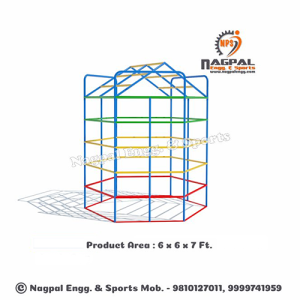
Nagpal Engg & Sports is a trusted Outdoor Climber Manufacturers in Delhi, specializing in robust climbing equipment designed to withstand weath
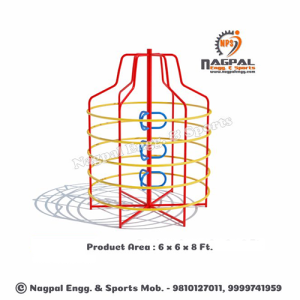
Nagpal Engg & Sports is a premier School Playground Climber Manufacturers in Delhi, offering safe, age-appropriate climbing equipment tailored
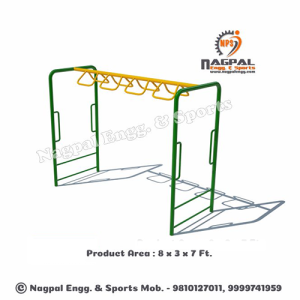
Nagpal Engg & Sports is a specialized Hanging Climber Manufacturers in Delhi, producing innovative hanging climbing equipment that challenges c
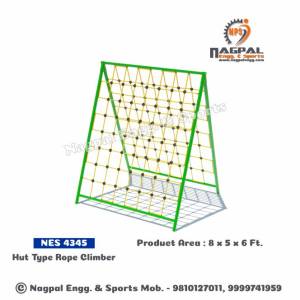
Nagpal Engg & Sports is a trusted FRP Rock And Rope Climber Manufacturers in Delhi, combining sturdy FRP rock climbing panels with durable rope
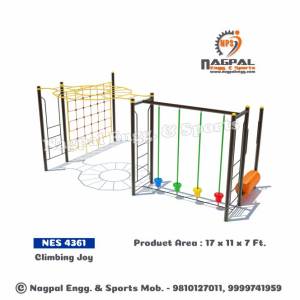
Nagpal Engg & Sports is a premier Children Rope Climbing Frame Manufacturers in Delhi, designing safe and fun rope-based climbing structures ta
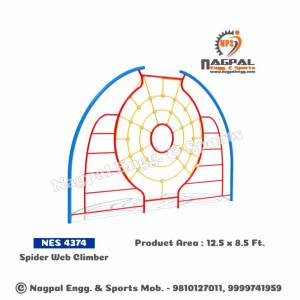
Nagpal Engg & Sports is a premier Bridge Playground Climber Manufacturers in Delhi, creating engaging climbing structures featuring suspension
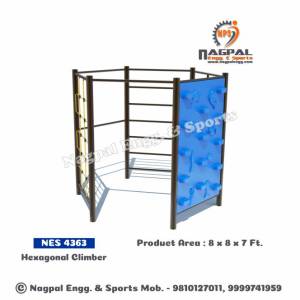
Nagpal Engg & Sports is a trusted Sunset Climber Playground Swing Manufacturers in Delhi, offering innovative playground swings combined with c
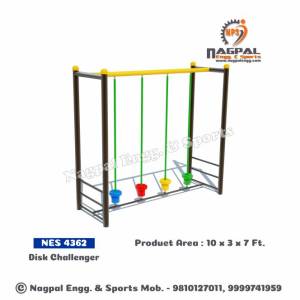
Nagpal Engg & Sports is a leading Straight Climber Playground Swing Manufacturers in Delhi, specializing in robust, straight-line climbing fram
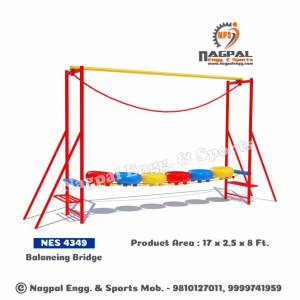
Nagpal Engg & Sports is a premier Playground Rope Climbers Manufacturers in Delhi, designing sturdy rope climbing structures made with high-ten